The NWHN HEALTH Program
|
|
Advocacy Goal
We advocate for maternal health with a goal to decrease racial disparity in maternal health and reduce maternal and infant morbidity and mortality in the State of Maryland and Nationwide.
|
Legislation
About The Black Maternal Health Momnibus ActBackground: The United States has the highest maternal mortality rate of any high-income country and significant disparities in outcomes – and the crisis is only worsening: the maternal mortality rate in 2021 was 89 percent higher than the rate in 2018. The Black Maternal Health Momnibus Act will address this crisis through historic investments that comprehensively address every driver of maternal mortality, morbidity, and disparities in the United States.
Bill summary: The Black Maternal Health Momnibus Act includes 13 individual bills that will:
Momnibus support: The Momnibus is endorsed by more than 200 organizations, listed here. Quotes in support of the legislation can be found here. A list of Momnibus cosponsors in the House can be found here. A list of Momnibus cosponsors in the Senate can be found here. |
Current Legislation Advocacy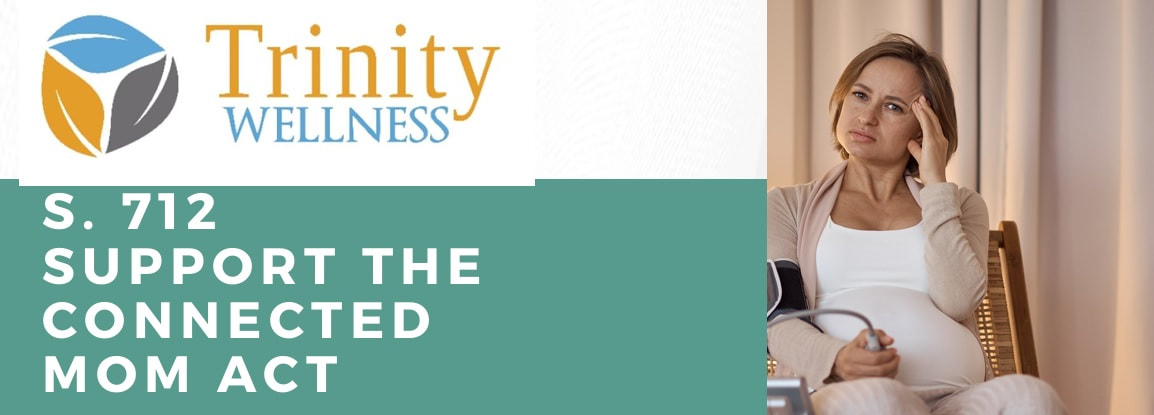
Support the Connected MOM Act. Telehealth and technology enabled devices have proven to be key assets in the medical provider’s toolbox for prevention and improved health outcomes for several conditions when direct patient care is unavailable. is critical to addressing maternal mortality and morbidity by helping screen new mothers for high blood pressure and related treatable and preventable conditions, such as preeclampsia, that lead to unnecessary and avoidable maternal deaths and adverse health outcomes. The Connected Maternal Online Monitoring (MOM) Act, S. 712, introduced by Sens. Cassidy (R-La.) and Hassan (D-N.H.), would require the Centers for Medicare & Medicaid Services (CMS) to send a report to Congress identifying barriers to coverage of remote physiologic devices (e.g., pulse oximeters, blood pressure cuffs, scales, blood glucose monitors) under state Medicaid programs to improve maternal and child health outcomes for pregnant and postpartum women. This bipartisan legislation would also require CMS to update state resources, such as state Medicaid telehealth toolkits, to align with evidence-based recommendations to help decrease maternal mortality and morbidity .Medicaid pays for almost half of all births nationally in the U.S. each year, and it plays a critical role in providing maternity related services, covering the vast majority of births for women of color and those living in rural areas. The American Medical Association strongly supports this legislation which would make a meaningful difference in addressing the unacceptably high rate of maternal mortality in the U.S., especially for women from marginalized populations.
|